
Finding inspiration in the commonplace: what boredom actually gives you

In 2020, a window and a doorway were the entire visual world for months. Here’s how that constraint became an entire series, and what it taught me about noticing what’s always there.
Finding inspiration in the commonplace sounds like good advice until you actually run out of anything else to look at. That happened to me in 2020, during lockdown, when the same window, the same doorway, the same houseplant were the entire visual world for months at a time.
Where Spacetime, Parallel Skies, and Confinement pieces actually came from
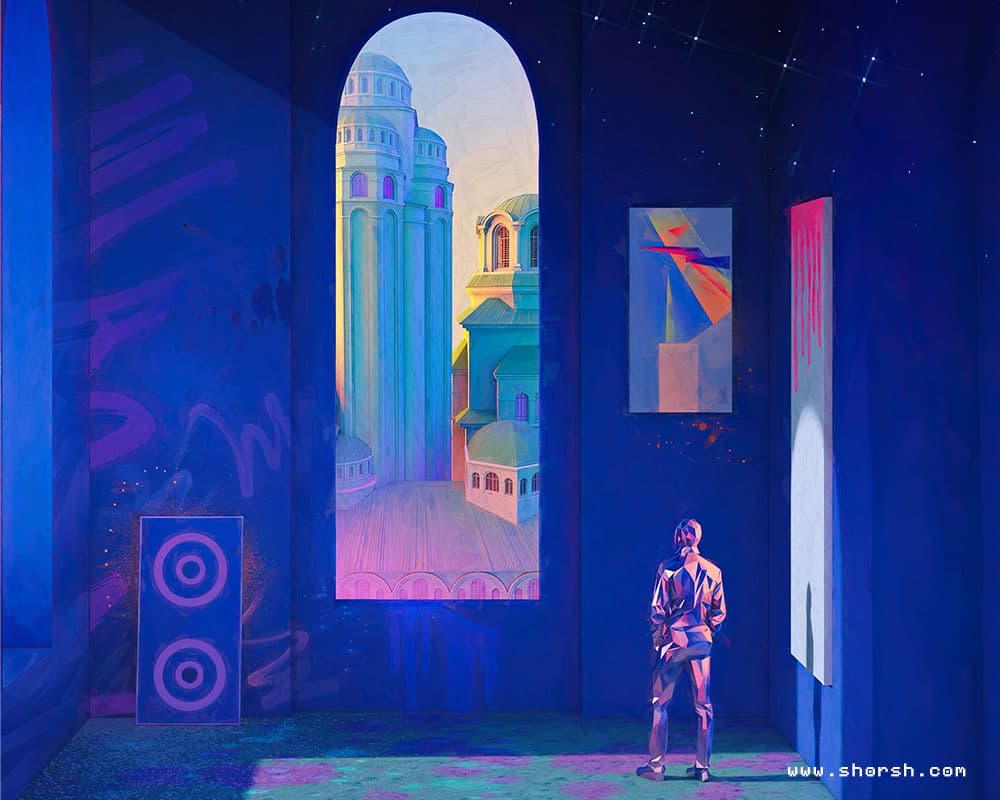
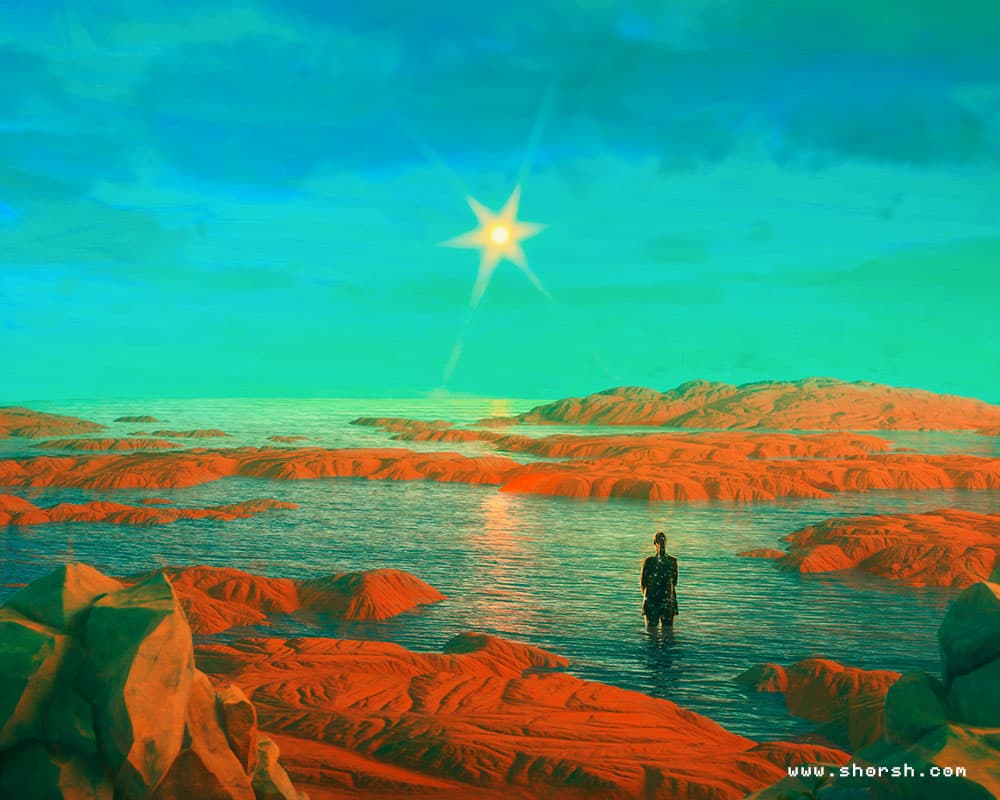
I made a whole series of pieces during that period. This post includes four of them: Spacetime, Parallel Skies, Multiverse and Confinement. In fact, none of them started from a dramatic idea. They started from staring at the same things every day: a doorway, a staircase, a window frame, a balcony, the sky outside and the corner where a plant sat. With nowhere to go, those ordinary thresholds became the thing I actually had to work with.
What came out of that constraint was a set of images where windows and doorways stop being architecture and start being portals. A staircase leading into open sky. A window opening onto a sea of clouds. A plant framed against a field of stars instead of a wall. The longing underneath all of it was simple: wanting to walk outside, wanting to be with people again, wanting open space that wasn’t rationed by square meters. Making the work was a way of getting some of that back without actually being able to leave.
There was also another window in the room that whole time, the screen. Meetings, meals, everything happened through glass and pixels, and that constant presence left its own mark on the work. Parallel Skies in particular carries traces of it: the color glitches of a video, the scan lines of a lagging stream, the chromatic aberration of a lens pushed past its limit. These experimental flaws were part of what the everyday actually looked like that year, so they became part of the visual language too, less by choice and more by proximity.


Why finding inspiration in the commonplace is easier said than done
Generally, a doorway you walk through fifty times a day stops registering as an image at all, it becomes pure function. What changed during lockdown wasn’t that the doorway got more interesting. It’s that I ran out of anything else to compare it to, so I actually looked at it for the first time in years.
That’s the real mechanism behind finding inspiration in the commonplace: not a switch you flip, but a forced narrowing of attention that makes you notice what was always there.
How to try finding inspiration in the commonplace yourself
Of course, you don’t need a pandemic to get the same effect, just a deliberate limit no matter were you are. Spend one day only sketching things within arm’s reach of your workplace. Photograph the same corner of your kitchen at three different times of day and notice how the light changes what you’d call “the same” scene. Redraw a doorway or a window in your own home as if it opened onto somewhere else entirely. Go from there to anywhere you can imagine.
The constraint does the work that motivation usually can’t. It’s not about training your eye to see beauty everywhere in the abstract. It’s about removing your other options until the ordinary is the only thing left to look at, and then actually looking.
Transforming ordinary moments into art
Ordinary experiences can be translated into art by shifting your perspective. Even making coffee or watching rain can inspire new work. A cluttered desk or a rainy window reveals unexpected beauty when you look with a creative eye.
The constraint does the work that motivation usually can’t. It’s not about training your eye to see beauty everywhere in the abstract. It’s about removing your other options until the ordinary is the only thing left to look at, and then actually looking.
Frequently Asked Questions:
How can artists stay inspired every day?
Build a small, repeatable habit instead of waiting for inspiration to strike: ten minutes a day looking closely at one ordinary object or corner of a room, sketched or photographed. Rotate between quick sketches, a phone photo, and a short written note so the habit doesn’t get stale.
What’s a good exercise for breaking out of routine without traveling anywhere?
Pick one object you see every day, your keys, a doorway, a window, and redraw it three different ways: exactly as it is, exaggerated, and as if it belonged to a different world entirely. That last version is closer to what actually happened with the Spacetime series: the same window, reimagined as a threshold to somewhere else.
Every ordinary space holds more than it shows on a normal day. Come see what I’m looking at right now on Instagram.