
Find your artistic voice: a practice, not a discovery

Nobody finds their artistic voice in one moment of clarity. It shows up slowly, through thousands of small decisions and the mistakes that actually teach you something.

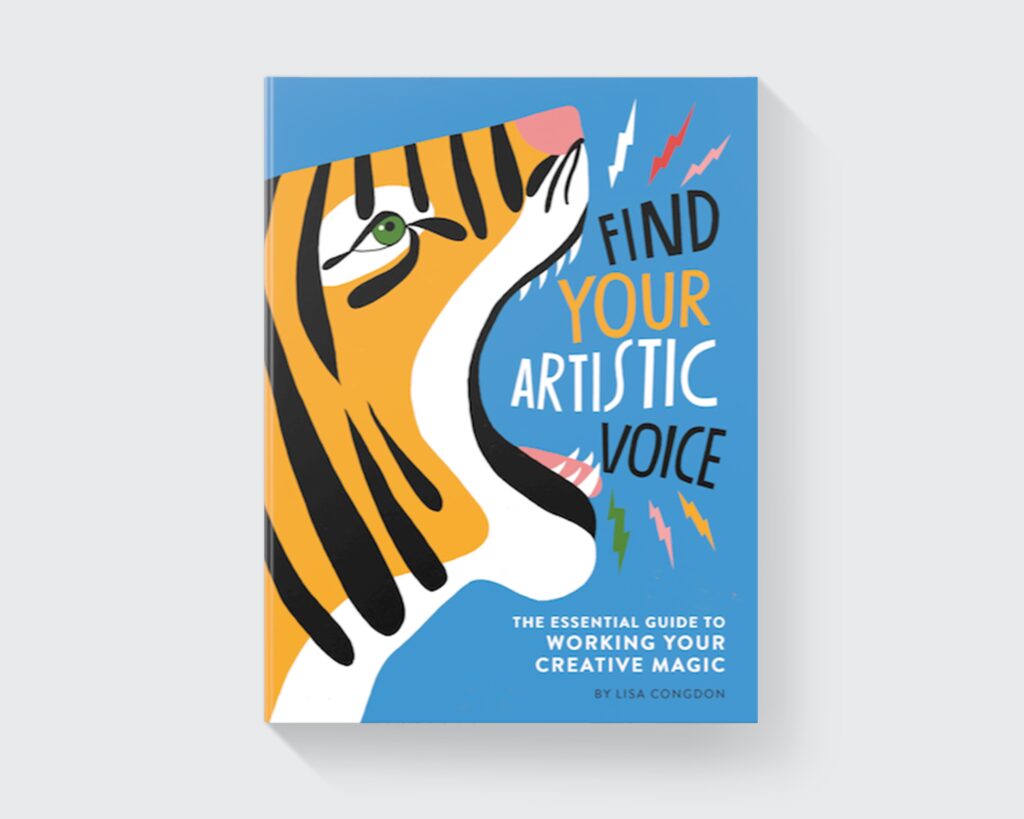
I’ve been re-reading Find Your Artistic Voice: The Essential Guide to Working Your Creative Magic by Lisa Congdon, a book I’ve recommended before. It pushed me to think about what actually changed my own work over the years, as opposed to what just sounded good in theory. Below are some key takeaways.
To find your artistic voice, treat it as a practice, not a discovery
Nobody finds their artistic voice in a single moment of clarity. It shows up gradually, through the accumulation of thousands of small decisions made across hundreds of pieces. Every sketch, every finished commission, every abandoned draft adds one more data point to a pattern you can only see in hindsight, never while you’re inside it.
That means patience isn’t optional. Often, the version of your work you make this year won’t look like the version you make in five years, and comparing the two too early just gets in the way.
Influence isn’t the enemy
Early in my career, I copied compositions from illustrators I admired almost exactly, just to understand how they built an image. That phase wasn’t a detour from developing my own voice. It was the training that made one possible later.
The shift happens when you stop copying a single influence and start filtering several through your own decisions at once. A color sensibility from one artist, a compositional habit from another, a subject matter you keep returning to on your own: none of it stays recognizable as someone else’s once it passes through enough of your own choices. Voice isn’t the absence of influence. It’s what’s left after you’ve metabolized enough of it that no single source is visible anymore.
Constraints help more than freedom does
An empty canvas and infinite options is one of the worst starting points for finding a distinct voice. Instead, I work better with a specific limitation: a two-color palette, a fixed composition rule, a self-imposed deadline. The constraint isn’t a creative sacrifice. It’s what forces a decision instead of an infinite hesitation between equally valid options.
The mistakes that helped me find my artistic voice
In fact, most of what I know about my own work came from pieces that didn’t turn out the way I wanted, not from the ones that did. A failed color combination taught me more about my own palette instincts than any successful piece did, because the failure forced me to articulate exactly what was wrong, which is a more precise kind of learning than “that worked.”
Finding your artistic voice isn’t a destination you arrive at and then stop working toward. It’s closer to a moving target that gets a little clearer every time you show up and make something, whether or not that something turns out well.