
A day in the life of an illustrator: my real routine

Coffee without sugar, a dog walk, a mood board, and Steam for art references. Here’s what my day actually looks like as an illustrator working from Buenos Aires.
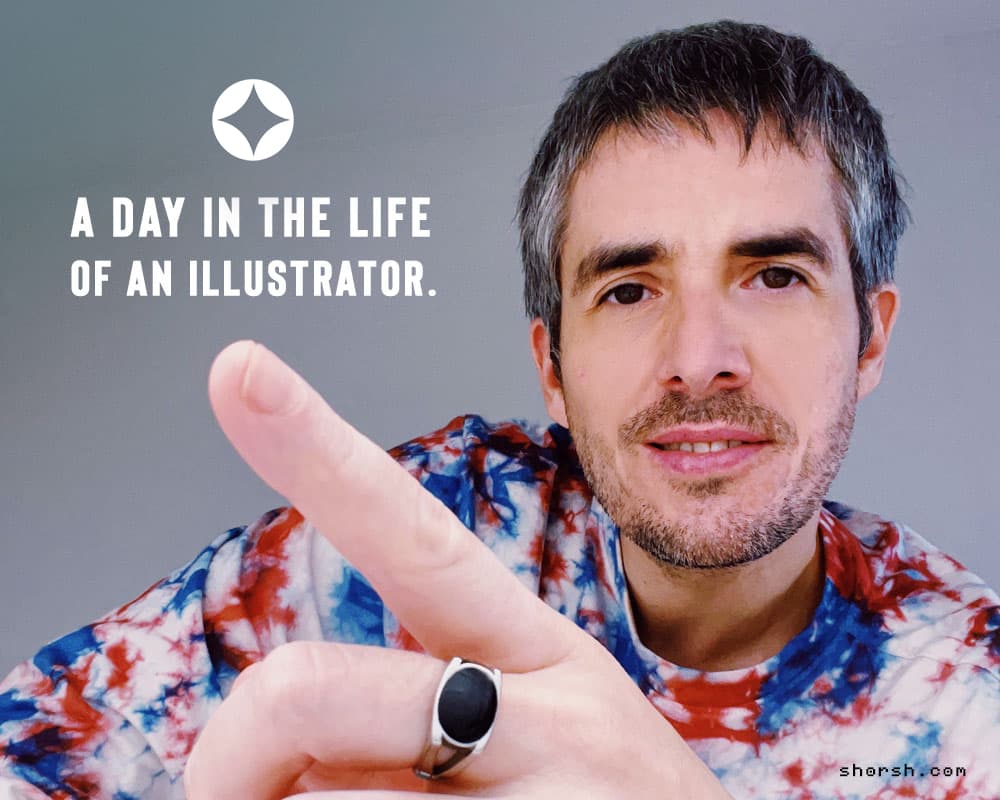
This is what a day in the life of an illustrator looks like from my studio. The scent of freshly brewed coffee, no sugar, fills the air as I settle in around 8 or 9 am. Once I have it, I’m ready. But before anything else, I grab my dog and we head to the park for a morning walk. Sunshine, fresh air, and a good audiobook. That’s how a day in the life of an illustrator starts for me: not at the desk, but outside, letting ideas arrive before I sit down to work on them.
Getting organized: tools for a working illustrator’s day
Once the walk is over, it’s all systems go! I rely heavily on Notion to keep my schedule organized (shoutout to their free version!). It’s my digital command center, holding project templates, notes, and a clear roadmap for the day.
Meanwhile, the bulk of my day is dedicated to illustration projects. Occasionally, design requests pop up, keeping things interesting. I sprinkle in short breaks throughout the day, not just to rest but because coming back to the piece with fresh eyes each time makes it easier to catch whether it’s still matching what I had in mind. A quick stretch, a lunch break, and later on, another tiny cup of coffee before getting back to work.
How I approach a new project
When starting something new, I almost always begin with a mood board. I collect images from Pinterest, books, my own camera, anything that captures the visual territory I’m trying to reach. Then I compile everything in Photoshop, organized by layers, and start sketching over it to pull out a color palette.
From there, depending on the project, I work in 2D or move into a clay render in 3D. For the 2D side, I’ve put together a roundup of free resources for illustrators worth bookmarking, pose reference, brush packs, color tools. I illuminate and texture that render with high quality materials, then often paint over the final version to add detail and push the piece further. I also keep a collection of free 3D textures on the site for materials. Plenty of projects still call for custom-built assets or premium libraries I pay for myself. Free resources don’t set the price of the work, they’re just one part of a much bigger process. And if the mood board process interests you, there’s a full walkthrough on how to build one.
The second half of the day
Around 6 or 7 pm I try to wrap up client work and leave room for personal projects. That might mean working on an illustration of my own, doing some freehand painting, or just switching off with a book, sci-fi film or some music.
Video games are also a consistent source of visual input for me. I spend more time on Steam browsing promotional art, key art, and concept work than actually playing. The level of craft that goes into game visuals, the world-building, the character design, the way studios use color and lighting to build atmosphere, is genuinely worth studying. It’s a different corner of the illustration industry, and keeping an eye on it stops my own references from narrowing.
What a day in the life of an illustrator is really about
Music, paintings, books, films, games, all of it feeds the work, just not in a straight line. The structure of the day matters, but so does leaving room for the things that aren’t work and still end up shaping it anyway.
That’s what it comes down to for me. Not just the hours at the desk, but staying curious enough that when I sit down to work, there’s something real behind it.