
Environmental art installations that turn landscape into the artwork

Land art that changes with the tide, storms that finish the piece, coral that swallows a sculpture whole. Six environmental art installations that give up control on purpose.
Environmental art installations solve a problem most studio work never has to face. The material is the landscape itself, and the artist doesn’t fully control it. In fact, six environmental art installations here make that clear, from a desert spiral in Utah to a sculpture park growing coral on the sea floor. Each one works with tide, wind, light, or time instead of against it.
Spiral Jetty: an environmental art installation that changes with the water
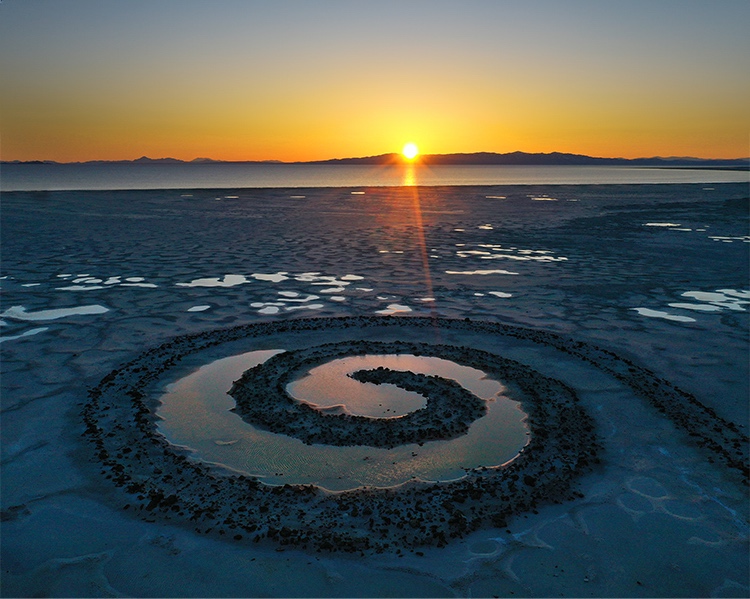
Robert Smithson built Spiral Jetty in 1970. He moved over six thousand tons of basalt rock and earth into the Great Salt Lake, Utah. He coiled it into a spiral nearly 1,500 feet long. Depending on the water level, the piece disappears under the lake for years at a time, then resurfaces coated in salt crystals. Smithson designed the work to change, so the artwork is really the process of submersion and reappearance, not a fixed object. Still, that’s a strange kind of authorship for an illustrator to sit with. I finish a piece and it stays finished. Spiral Jetty was never meant to.
Sun Tunnels: aligning stone with the solstice
Nancy Holt built Sun Tunnels in 1976, roughly eighty miles from Spiral Jetty in the same Utah desert. Four massive concrete cylinders, each eighteen feet long, sit in the desert. The rising and setting sun aligns through their centers on the summer and winter solstices. Holes drilled into the walls, in patterns matching four constellations, let light through during the day. Each tunnel doubles as a rough calendar and a naked-eye observatory. Basically, it’s a piece built around events that happen twice a year. Meanwhile, most of the time you’re just standing in a desert looking at concrete tubes. You’re waiting for the sky to catch up with the design.

Ephemeral sculpture on the Isle of Skye
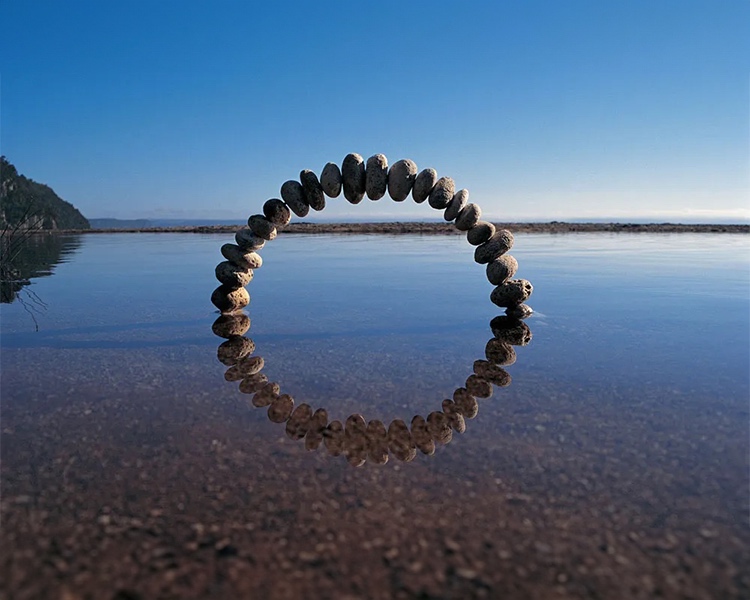
On Scotland’s Isle of Skye, artist Martin Hill and photographer Philippa Jones build sculptures out of stone, branches, and leaves near the Fairy Pools. Instead of lasting, the work erodes or washes away within days. Photographing the piece becomes part of the work itself, since the sculpture won’t outlast the season. Still, there’s something honest about building art you know won’t survive contact with the place it’s made from.
The Lightning Field: an environmental art installation built for storms
Walter De Maria installed The Lightning Field in the high desert of New Mexico in 1977. It’s four hundred stainless steel poles, arranged in a precise grid spanning a mile by a kilometer. Each one is polished to a point. On a clear day the poles catch the light and mostly disappear. During a storm, though, they draw lightning strikes. Visitors who want to see the piece have to book an overnight stay nearby and wait. Instead, De Maria left the actual event of the work up to whatever the sky decides to do that week.

An underwater sculpture park off the coast of Grenada
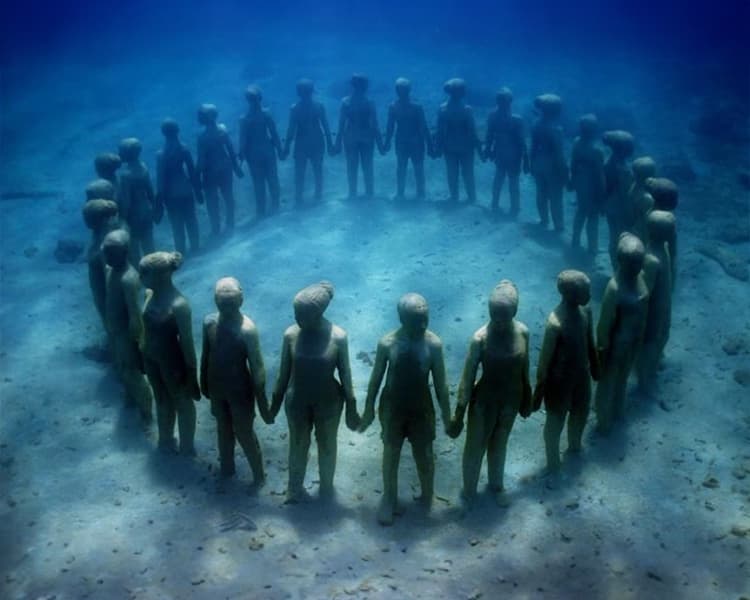
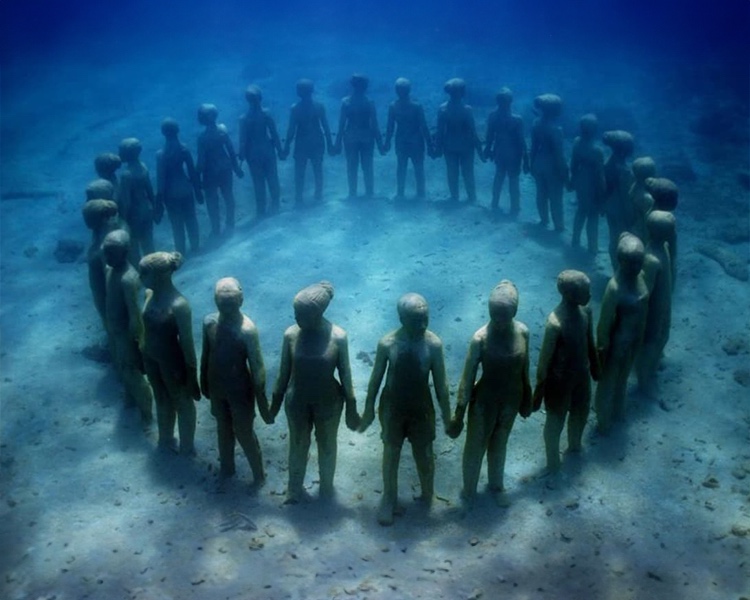
Jason deCaires Taylor’s underwater sculpture park sits submerged off the coast of Grenada, one more entry in this run of environmental art installations built to change on purpose. Taylor never intended the park to stay as it looked on installation day. Eventually, coral colonizes the concrete figures, and fish move in. The sculptures slowly disappear under the very marine life they exist to shelter. It’s an odd goal for a sculptor: build something so it eventually looks nothing like what you made.
Antony Gormley’s Inside Australia, Lake Ballard
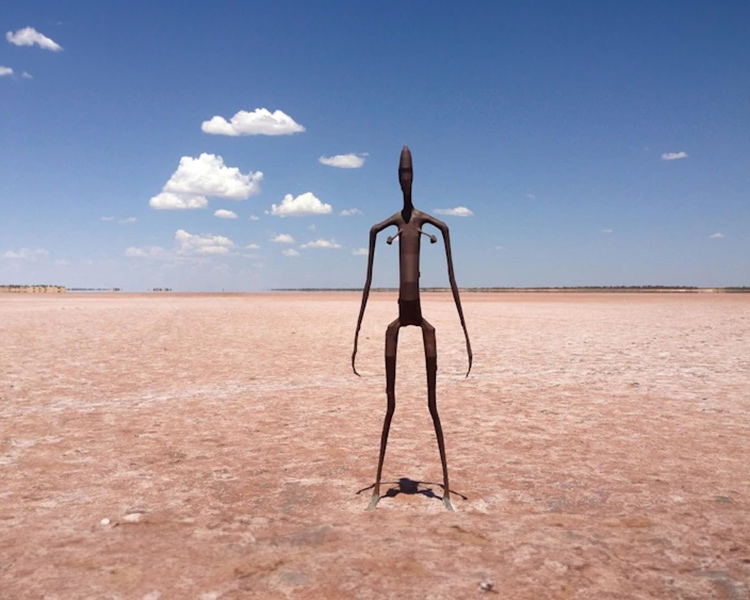
In the Australian Outback, Antony Gormley cast fifty-one humanoid figures from the bodies of local residents. He scattered them across the dry bed of Lake Ballard. Even so, seen from a distance, the figures look almost lost in the scale of the landscape around them. Each one is small against several kilometers of empty salt flat. Gormley built the piece around that imbalance on purpose, setting a human figure next to a landscape too big to fully take in.
What connects these six environmental art installations isn’t a shared aesthetic, since they don’t look anything alike. Instead, each artist gave up some amount of control over the final image and let weather, tide, coral, or the solstice finish the work. That’s the part I keep thinking about back in the studio, where I control every layer until I decide otherwise.