
Drawing to think: the hands that shape ideas

Discover how drawing shapes ideas, offering clarity, creativity, and genuine inspiration. Explore the profound connection between art and thought!
“To draw is to sharpen an idea, drawing is the precision of thought”
Henri Matisse
I think about that Matisse line often, mostly because it’s true in a way that’s easy to forget. Drawing isn’t just sketching lines and shapes. Still, it’s a way into clarity that thinking alone doesn’t get you to. Here’s what happens when you draw to think, and how to use that connection between hand and mind on purpose.
Drawing to think starts with hand and mind working together
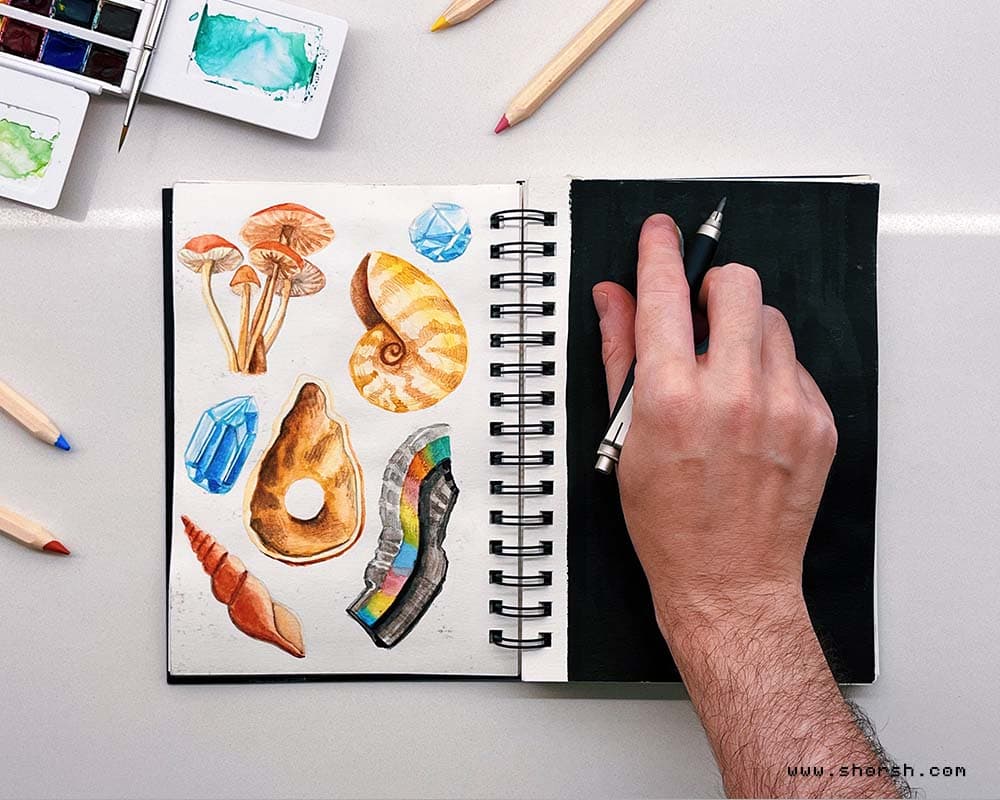
When pencil meets paper, or stylus meets tablet, both the physical and the cognitive sides engage at once. Drawing something accurately forces real observation, the kind that notices details and nuances most people scroll straight past. Eventually, that habit of close looking carries over. It makes for more careful thinking in general, not just at the drawing table. Every drawing is also a string of small decisions about proportion, perspective, and composition. That’s really just problem-solving in disguise. Also, considering different angles on paper is good practice for considering different angles on a problem later.
Turning abstract ideas into something you can see
In fact, drawing is also the bridge between an idea in your head and something you can point at. It gives shape to whatever was abstract a moment ago. That makes it a lot easier to work with. That’s usually the moment an unconventional idea stops sounding far-fetched and starts looking like something that could genuinely work.
The flow state drawing gets you into
Drawing regularly tends to pull you into a state where time stops mattering. The mind stays fully on the task, nowhere else. That state does more than sharpen the work. It also puts you back in touch with your own thoughts and feelings. It’s the same mindful state I try to protect from screens the rest of the day.
Drawing as its own language
Drawing works as a form of communication too, a way to say something that’s genuinely hard to put into words. Generally, translating a thought or a feeling into something visual makes the expression feel more honest, less filtered. Matisse’s point holds for anyone, not just artists. Drawing sharpens thinking no matter who’s holding the pencil.
How to build a drawing-to-think habit
Keep a sketchbook nearby, always, so you can capture an idea the moment it shows up. It doesn’t need to be anything special. A plain notebook works, and so does the back of whatever’s already lying around. Draw without expecting it to look good. Treat the page like nobody’s watching, because usually nobody is. Quality matters less than quantity at the start. Sketch constantly and let the pencil move before the doubt catches up. With enough practice, drawing to think stops being a tool you reach for occasionally and turns into how you think.