
Sketchbook tips for artists: 8 ways to use it better
Most artists treat their sketchbook like a portfolio. That’s the fastest way to stop using it. Here are 8 habits that actually make a sketchbook work.
share this!
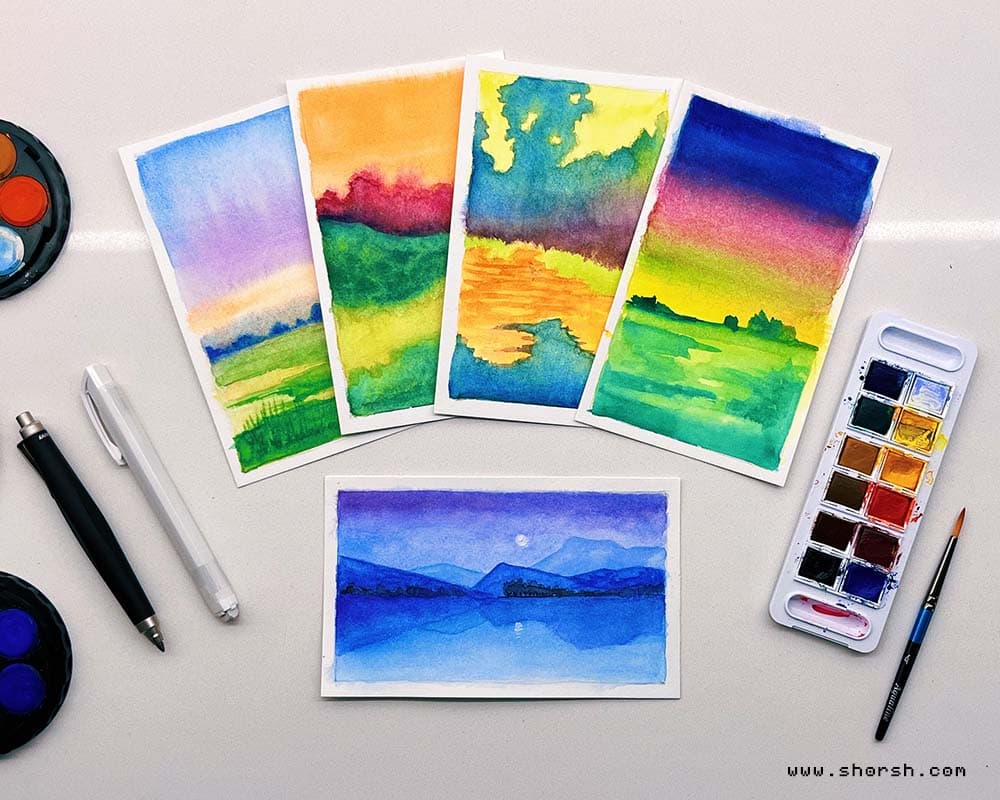
Generally, the sketchbook tips for artists that actually stick tend to be the ones that change how you think about the object itself. Most people treat their sketchbook like a portfolio in progress: every page has to justify itself, every drawing has to earn its place. That’s, in fact, the fastest way to stop using it.
I’ve kept sketchbooks for years. They’re where my actual thinking happens, not in the finished work. Here’s what I’ve learned.
Treat your sketchbook like a lab, not a gallery
The single most important shift is permission. Permission to draw badly, to test something that won’t work, to write a note next to a sketch that says “this is wrong but I don’t know why yet.” A sketchbook that only contains your best work isn’t doing its job. The mess is the point.
Experiment with materials you don’t normally use
If you always work digitally, pick up a pen and ink. If you paint, try dry media. The unfamiliarity slows you down in a useful way: you can’t rely on muscle memory, so you start actually looking at what you’re doing. Different tools also produce marks you can’t replicate any other way, and sometimes those accidents become the most interesting things in the book.e.
Work in themes: one of the best sketchbook tips for artists
Picking a constraint, a subject, a palette, a format, and committing to it for two weeks or a month is one of the better sketchbook tips for artists I’ve come across. Still, it forces you to solve the same problem repeatedly. Portraits for a month. Urban sketching for a month. Hands. In any case, the repetition teaches you things that variety doesn’t.
Do quick sketches without finishing them
Not every drawing needs an elaborate choreography. Infuse your sketchbook with spontaneity through quick sketches. Capture fleeting ideas, practice dynamic gestures, and embellish them with text and notes catching the spark of the moment, a treasure trove for future inspiration.
Set a specific goal for your sketchbook practice
“Draw more” doesn’t work as a goal. “Fill one page before bed” does. The smaller and more specific the commitment, the more likely you are to do it regularly. These are the sketchbook tips for artists that tend to have the most impact over time: the small, daily ones. Five minutes every day adds up faster than three hours once a month, and the habit itself starts to matter as much as what you produce.
Date every entry
Even so, this is a small habit with a surprisingly large payoff. When you go back through old sketchbooks and can track when something was drawn, you get an honest picture of your own development. You also start to notice patterns: when you were working under pressure, when you were experimenting, when you were just going through the motions. That information is genuinely useful.
Look at other artists and let it feed your sketchbook
Not copy, respond. Find something that interests you, whether it’s a composition, a technique, or a way of handling light, and try to do something with that influence in your own pages. Keep a section for references, clippings, things that caught your eye. Eventually, that section becomes a record of what you were looking at, and that turns out to be as interesting as the drawings themselves.
Let it get weird
The pages nobody will ever see are where the most interesting things happen. Abstract marks, combinations that shouldn’t work, ideas that feel embarrassing to put down: those are usually the ones worth following. That, more than anything, is what makes sketchbook practice useful for artists: it stays yours.